Solutions
Structured Cabling
The physical layer that connects everything, organized to last.
Overview
The physical layer that connects everything, organized to last.
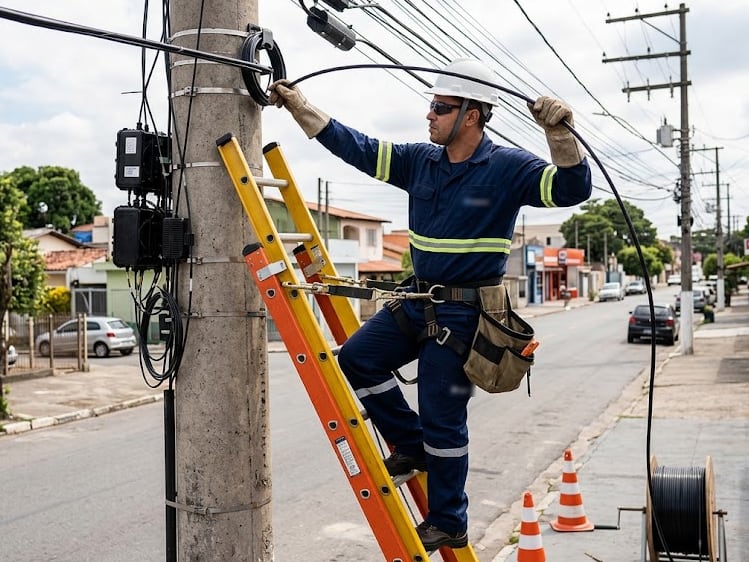
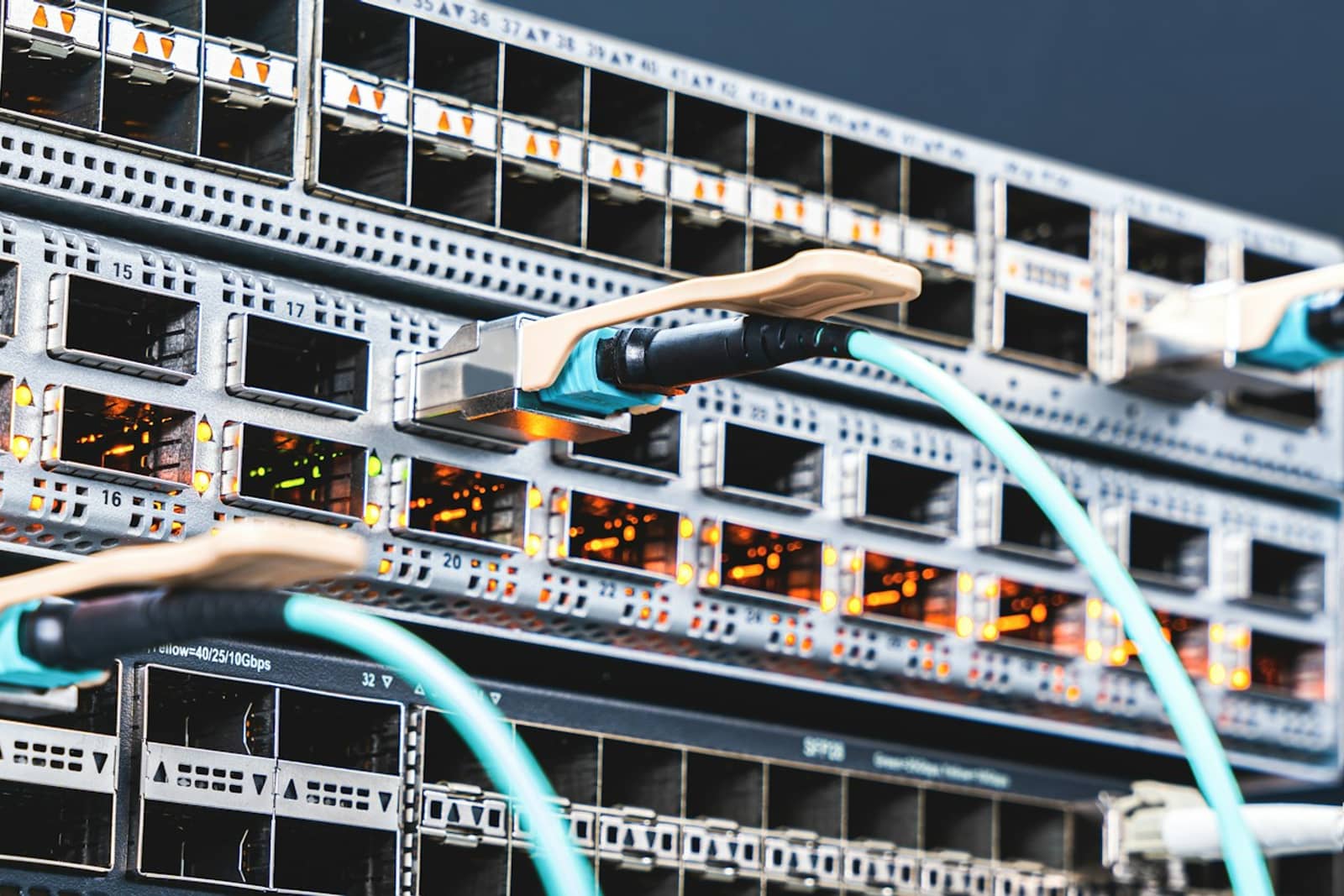
Servers, networks and storage only communicate well when the physical layer is done right. We deploy fiber-optic and copper backbone and horizontal cabling, with terminations, splices, connectorization, rack organization and cable pathways.
The same method applies to large-scale data centers and to Edge sites, where space is limited and timelines tend to be short. In both cases, clear labeling and documented testing make operations and future expansions easier.
What we deliver
Clear scope, from start to finish
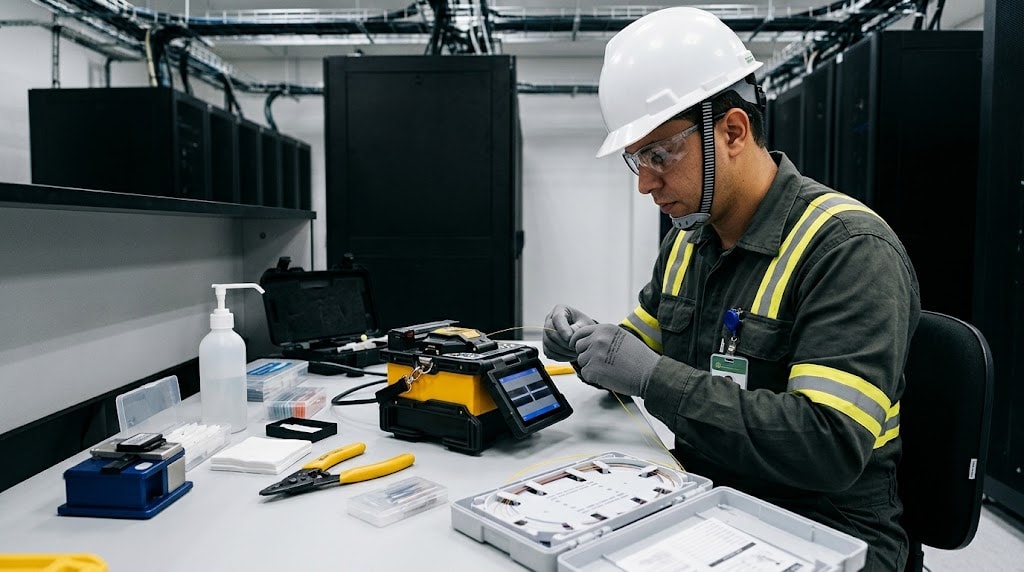
Single-mode and multimode fiber
Pulling, termination, connectorization and splicing according to the fiber type defined in the design.
Copper cabling
Horizontal and distribution links terminated and organized at the panels.
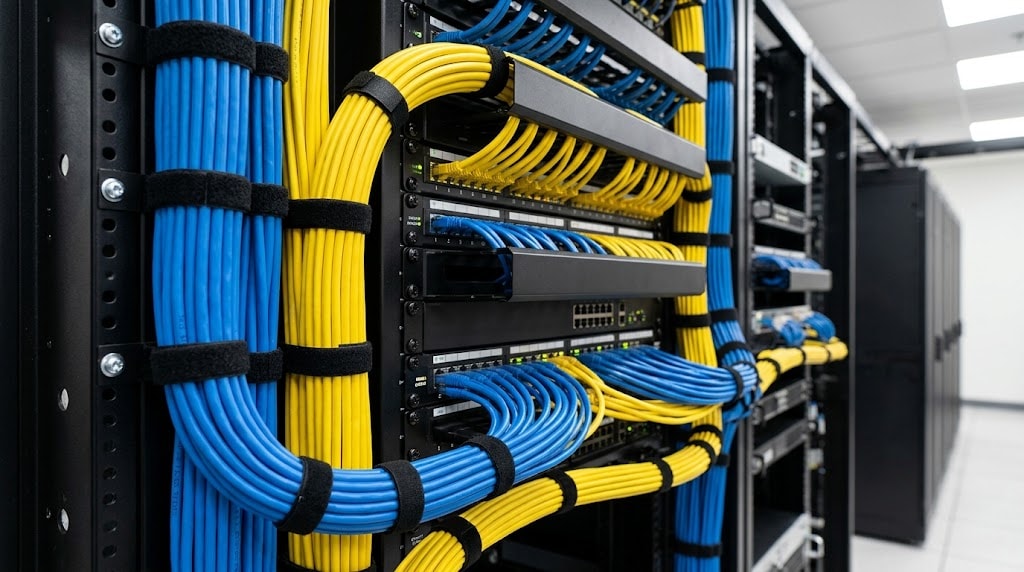
Rack and pathway organization
Cable management, bend radius respected and tray fill planned.
Identification and labeling
A single standard for cables, ports and panels, applied end to end.
Testing and reports
Testing according to the design or client criteria, with results recorded for each link.
Edge environments and expansions
Deployment in compact spaces and expansions in live environments, planned so as not to affect operations.
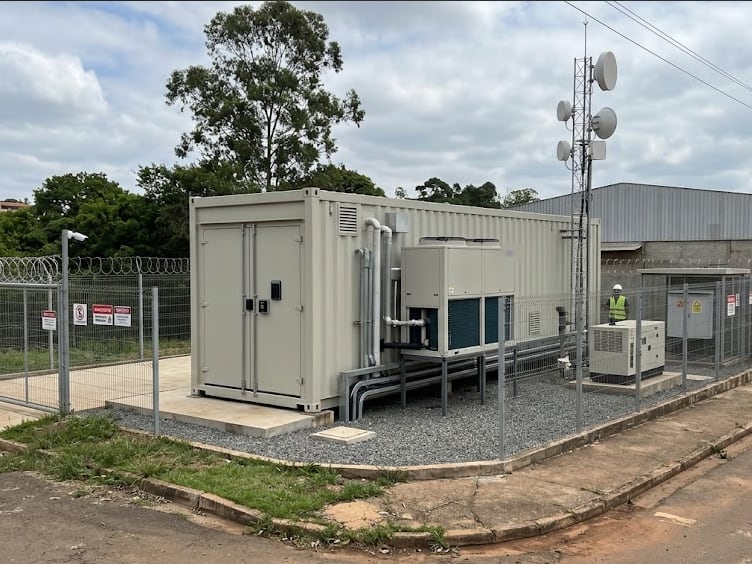
Edge
The same care in Edge environments
Edge sites bring infrastructure closer to users, in compact spaces with little room for improvisation. We plan space usage, pathways and labeling around the available space and the site's access rules.
Expansions follow the same logic: work fronts planned so as not to affect what is already in operation, and documentation updated at the end.
Step 1: Site survey and routes
We check the environment and define where each cable will run.
Step 2: Materials and preparation
We stage materials and prepare pathways, racks and panels.
Step 3: Pulling and termination
We pull, terminate and organize the cables at the planned points.
Step 4: Testing and labeling
We test every link and apply the standardized labeling.
Step 5: Link documentation
We record the results and hand over documentation of the work done.
Benefits
What changes for your operation
Predictable performance
Well-executed terminations and testing reduce connection failures.
Easier maintenance
Organized, labeled cables shorten any intervention.
Growth without rework
Pathways and fill planned with expansions in mind.
Traceability
Every link has its labeling and results on record.
Frequently asked questions
Common questions
Didn't find yours? Talk to the LGC team.
Do you work with single-mode and multimode fiber?
Yes, with both types, as well as copper cabling. The type is defined in the design according to the application.
What tests are performed?
Testing follows the design criteria or the client's requirements. Every result is recorded and delivered in a report.
Do you serve Edge data centers?
Yes, we cover Edge environments and expansions. During the site survey we assess space, access and timeline constraints.
Can you install while the environment is live?
We plan work fronts and windows to reduce impact. Feasibility depends on the environment and the site rules.
Who supplies the materials?
Either LGC or the client. The split is defined in the scope, along with receiving inspection.
Ready to talk about structured cabling?
Tell us what you need on WhatsApp or through the form below. Our team will get back to you with the next steps.
Form
Send us a message
The subject is already set to Structured Cabling.